Empower frontline field nurses, clinics, and health organizations with instant offline AI cell scanning, patient tracking, and 15-minute automated outbreak surveillance.
Four simple steps to diagnose malaria and prevent regional outbreaks
Clip a low-cost $5 smartphone microscope lens adapter onto your camera or place over your lab microscope eyepiece.
Position the Giemsa-stained thin or thick blood smear slide inside the glowing laser reticle or upload from your gallery.
Our on-device neural network analyzes red blood cells in under 1 second, calculating parasite density per μL completely offline.
Diagnoses auto-sync to regional surveillance dashboards when online, triggering instant emergency SMS alerts if cases spike.
Built for frontline medical teams, district health centers, and global health NGOs
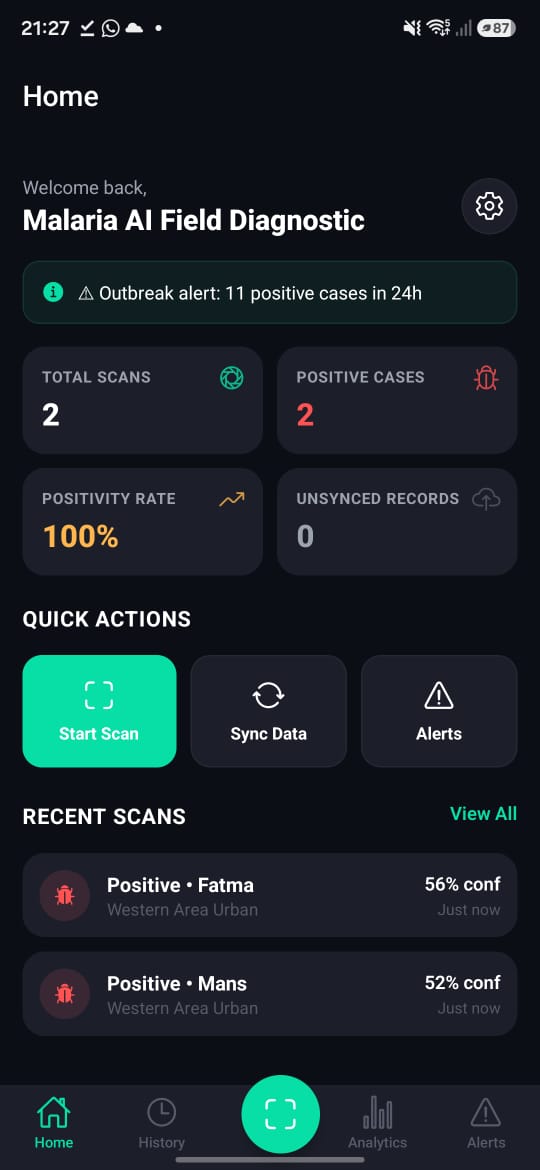
Runs neural network diagnostics directly on phone hardware. Performs full AI slide classification in remote villages without internet.
Log patient details (name, age, gender, unique patient ID) attached directly to diagnostic scans and parasite counts.
Backend surveillance automatically monitors case density by district, sending automated SMS and Email warnings to health officials.
Auto-geocodes patient coordinates to map high-risk malaria districts and track vector spread across regions.
Strict user-scoped authentication ensures each clinic and health worker accesses only their own organization's records.
Export diagnostic logs, parasite density metrics, and patient records to CSV/PDF for Ministry of Health reporting.
Accessible pricing designed for independent field workers, health centers, and global health NGOs
For individual healthcare workers & independent field researchers
For regional clinics, community hospitals & field diagnostic teams
For international health agencies, NGOs & national surveillance
Everything you need to know about implementing Malaria AI in your health center
No. The core AI neural network (`malaria_classifier.tflite`) runs completely on-device. Diagnostic scans and patient logging work 100% offline in remote areas without cellular service.
You can use low-cost clip-on smartphone microscope lenses (100x–1000x magnification), Foldscopes, CellScope adapters, or simply capture photos directly through a lab microscope eyepiece.
All local patient data is stored in encrypted SQLite databases on the phone. Cloud sync uses multi-tenant JWT authentication, ensuring records are strictly scoped to your clinic account.
When field workers sync data, our surveillance engine aggregates case numbers by district. If positive cases exceed your threshold (e.g. 10 cases in 24h), SMS/Email alerts are dispatched automatically.